
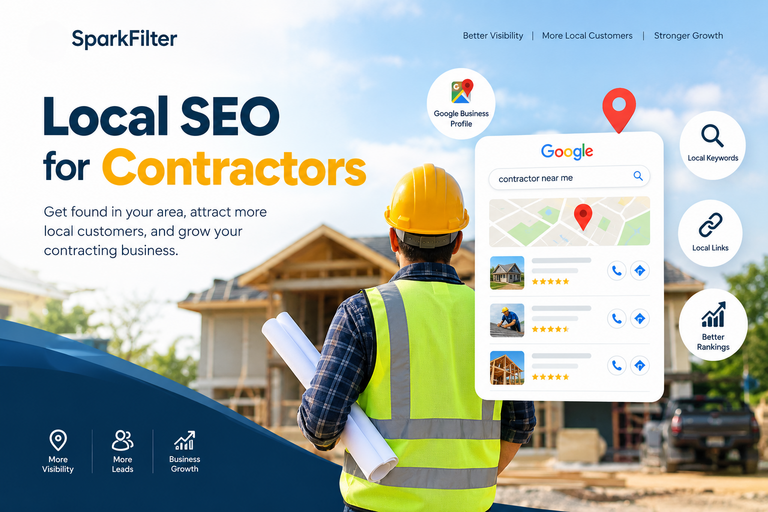
Contractors often depend on local customers to grow their businesses. Whether you work in roofing, plumbing, electrical services, HVAC, or general construction, people in your area need to find your services when they search online. Today, many customers use Google to find contractors, compare services, read reviews, and decide which business to contact.
This is where Local SEO for Contractors becomes important. It helps contractors improve their visibility in local search results and connect with people who are actively looking for services in their area. A well-planned local SEO strategy can help your business reach the right audience, build trust, and create a stronger online presence.
However, local SEO is not only about appearing on the first page of Google. It also involves providing useful information, maintaining accurate business details, building a positive reputation, and making it easy for potential customers to understand your services.
In this guide, we will explore how local SEO works for contractors, why it matters, and which practical steps can help improve your local search visibility.
What Is Local SEO for Contractors?
Local SEO for Contractors is the process of improving a contractor’s online presence so that people can find their services in relevant local search results. It focuses on connecting a business with customers who are searching for specific services in a particular city, town, or service area.
For example, someone searching for a roofing contractor in Dallas may see local businesses, Google Maps listings, customer reviews, and relevant websites. Local SEO helps contractors improve the information and signals that search engines use to understand their business and its location.
Unlike general SEO, local SEO places more attention on geographic relevance. A contractor does not always need to reach a national audience. Instead, the goal is to become more visible to people in the locations where the business actually provides services.
This includes optimizing a Google Business Profile, creating useful service pages, maintaining consistent business information, earning genuine customer reviews, and improving website performance.
Why Local SEO Matters for Contractors
Most customers want to work with contractors who serve their area. When a homeowner needs a plumber, electrician, roofer, or HVAC technician, they often search online to find nearby service providers.
If your business has limited local visibility, potential customers may discover other contractors before they find you. A strong local SEO strategy helps search engines understand what services you offer and where you operate.
Local SEO can also support long-term business growth. When your website provides helpful information and your business profile contains accurate details, customers can make more informed decisions.
Another important benefit is trust. A complete business profile, genuine customer feedback, clear service descriptions, and helpful website content can make your company appear more reliable to people researching local contractors.
Local SEO does not guarantee a specific ranking or a steady number of inquiries. However, consistent optimization can improve the chances of your business appearing for relevant searches and reaching people who need your services.
How Google Ranks Local Contractor Businesses
Google uses several factors to determine which businesses appear in local search results. Although its exact ranking systems are not fully public, Google identifies relevance, distance, and prominence as key local ranking factors.
Relevance refers to how closely a business matches what someone is searching for. If your business provides roof repair services, your website and business profile should clearly describe those services.
Distance refers to how far a business is from the searcher’s location or the location included in the search. Contractors who serve multiple areas should clearly explain their actual service coverage.
Prominence relates to how well-known a business is. Google may consider information such as links, reviews, and other signals that help establish a business’s reputation.
These factors work together. A contractor may have a well-optimized website but still find it difficult to appear for searches in areas that are far outside their service location. This is why a local SEO strategy should focus on accurate information, useful content, and a genuine local presence.
Google Business Profile Optimization for Contractors
A Google Business Profile is one of the most useful tools for contractors who want to improve their local visibility. It allows your business to appear on Google Search and Google Maps when people look for relevant services.
Start by claiming and verifying your business profile. Choose the most accurate primary business category and add other relevant categories when appropriate. For example, a plumbing company should use a plumbing-related category instead of choosing a broad category that does not clearly describe its main service.
Complete your business information, including your business name, phone number, operating hours, services, and website. If you operate as a service-area business and do not receive customers at your business address, follow Google’s guidelines for hiding that address and adding the areas you genuinely serve.
Adding real photos of completed projects, equipment, and your team can also help potential customers understand your work. Keep the profile updated whenever your services, hours, or other important details change.
Avoid adding unnecessary keywords to your business name or listing locations you do not serve. Accurate information helps create a better experience for customers and supports a trustworthy business presence.
Keyword Research for Contractor Websites
Keyword research helps contractors understand what potential customers type into search engines when looking for local services. Choosing relevant keywords is an important part of building an effective local SEO strategy.
For example, a roofing contractor may want to understand searches related to roof repair, roof installation, roof inspections, and storm damage repair. A plumber may focus on drain cleaning, pipe repair, water heater installation, and other services that match the company’s actual work.
Location-based keywords can help connect these services with a specific area. Phrases such as “roof repair in Austin” or “plumber in Dallas” show a clearer local intent than broad service terms.
Tools such as Google Keyword Planner, Semrush and Ahrefs can help identify related search terms, estimate search demand, and explore competing pages. However, keyword selection should not depend on search volume alone. The intent behind a search and the relevance of a keyword to your actual services are equally important.
Use your research to create natural page titles, headings, service descriptions, and helpful content. Avoid repeating the same keyword unnaturally throughout a page. Content should answer real customer questions rather than exist only to include search terms.
Create Dedicated Service Pages
A contractor website should make it easy for visitors to understand each service the business provides. Placing every service on one general page can make it difficult for search engines and potential customers to find detailed information about a particular job.
Creating a separate page for each major service gives you room to explain the work, describe common problems, and answer relevant questions. For example, a roofing company may have individual pages for roof repair, roof replacement, roof inspections, and gutter installation.
Each page should have a clear heading, a useful introduction, detailed service information, and relevant photos where available. Explain what the service involves, when a customer might need it, and how your team approaches the work.
Contractors who serve several cities can also create location pages when they have genuinely useful information for each area. These pages should not simply repeat the same content with different city names. Include relevant local details, examples of completed work, and accurate information about service availability.
A clear page structure also helps visitors move between related services. Internal links can connect relevant service pages, location pages, and educational articles, making the website easier to navigate.
Build a Strong Online Reputation Through Customer Reviews
Customer reviews are an important part of local SEO because they help people understand the experiences of previous customers. They can also contribute to a business’s prominence in local search results.
Contractors can encourage customers to leave honest feedback after completing a project. A simple follow-up message with a direct review link can make the process easier. The request should be polite and should not pressure customers to provide positive reviews.
Responding to reviews is also an important part of reputation management. Thank customers for sharing positive experiences and respond professionally to negative feedback. When a customer raises a concern, acknowledge the issue and explain how the business can help resolve it, without sharing private information.
Reviews should always come from genuine customer experiences. Buying reviews, offering rewards in exchange for positive ratings, or posting fake feedback can damage trust and violate platform policies.
A consistent approach to collecting and responding to honest reviews can help contractors build a stronger relationship with their local community.
Maintain Consistent Business Information Across the Web
Business information should be accurate and consistent wherever customers find your company online. This includes your business name, address, phone number, website, and other important details.
Local directories, industry websites, professional associations, and relevant business listings can help people discover your services. These listings are often called local citations.
For example, if your company changes its phone number, update the information on your website, Google Business Profile, and other important directories. Outdated details can confuse potential customers and make it harder for them to contact you.
Focus on trustworthy and relevant platforms rather than submitting your website to every directory available. A smaller number of accurate, useful listings is more valuable than a large collection of poor-quality or unrelated entries.
Contractors can also look for genuine opportunities to earn links from local organizations, suppliers, trade associations, and community websites. These links can help people discover the business and contribute to its wider online presence.
Improve Website Speed and Mobile Experience
Many people search for contractors using mobile devices, especially when they need help with a household problem. A website that is difficult to use on a small screen may cause visitors to leave before finding the information they need.
A mobile-friendly contractor website should have readable text, clear navigation, properly sized images, and buttons that are easy to tap. Important information, such as services and contact details, should be easy to find.
Website speed is another important consideration. Large image files, unnecessary scripts, and poorly configured hosting can make pages load slowly. Compressing images, using efficient code, and reducing unnecessary resources can improve the overall experience.
Google’s Core Web Vitals provide useful measurements of loading performance, responsiveness, and visual stability. Contractors can use Google PageSpeed Insights to identify technical problems and find areas for improvement.
Regularly test the website on different mobile devices and browsers. Fix broken links, check contact forms, and make sure important pages load correctly. A reliable website helps customers access information without unnecessary difficulty.
Create Helpful Local Content
Content marketing can help contractors answer common questions and demonstrate their knowledge. Instead of publishing articles only to target keywords, focus on topics that are useful to homeowners, property managers, and other potential customers.
A roofing contractor could explain how to recognize roof damage, what happens during a roof inspection, or how seasonal weather can affect roofing materials. An HVAC company might publish guidance about maintaining air filters, understanding unusual system noises, or preparing equipment for seasonal changes.
Local content can also address issues that are relevant to the areas a contractor serves. For example, an article about preparing roofs for heavy rainfall may be useful in regions that experience frequent storms.
Content should be accurate, easy to understand, and based on reliable knowledge or real work experience. When technical or safety issues are discussed, explain the limits of general advice and recommend qualified professional help where needed.
Publishing useful articles regularly can support topical relevance, answer customer questions, and create additional opportunities for people to discover your website through search engines.
Use Local Business Schema Markup
Schema markup is structured data that helps search engines understand important information about a website and the business behind it. For contractors, relevant structured data can describe the company, its services, contact details, and location information.
Depending on the business, suitable schema types may include LocalBusiness or a more specific supported subtype. The information in the markup should match the visible content on the website. Adding inaccurate details or marking up information that visitors cannot see should be avoided.
Contractors can use Google’s Rich Results Test and Schema.org documentation to review their structured data. Schema markup does not guarantee higher rankings or special search result features, but it can help search engines interpret relevant business information.
Build Relevant Local Backlinks
Backlinks are links from other websites that point to your website. Relevant backlinks can help search engines discover your pages and understand how your business is connected to other websites.
For contractors, useful link opportunities may include local business associations, construction industry publications, trusted suppliers, community organizations, and professional directories.
For example, a contractor who participates in a local community project may receive a genuine mention from an organization that reports on the work. Similarly, contributing useful information to an industry publication may create an opportunity to link to a relevant resource on the contractor’s website.
The main goal should be to earn links naturally by providing useful information, sharing expertise, and building genuine professional relationships. Avoid automated link schemes, irrelevant guest posts, and excessive link exchanges that exist only to manipulate search rankings.
Quality, relevance, and authenticity are more important than simply collecting a large number of backlinks.
Track and Measure Local SEO Performance
Local SEO requires regular monitoring to understand which strategies are working and which areas need improvement. Contractors should review their search visibility, website activity, and customer engagement over time.
Google Search Console can help you understand which search queries lead people to your website, which pages receive impressions and clicks, and whether Google has encountered indexing problems.
Google Analytics can provide information about website visitors, traffic sources, user engagement, and actions taken on the website. Google Business Profile performance data can also help you understand how customers interact with your business listing, where the available metrics are supported.
Track relevant keywords, review important landing pages, and monitor changes in local visibility. Since local rankings can vary by searcher’s location, avoid relying on a single search from one device as a complete measure of performance.
Review your results regularly and use the information to improve service pages, update outdated content, correct technical problems, and refine your overall local SEO strategy.
Common Local SEO Mistakes Contractors Should Avoid
Some contractors struggle with local search because their online information is incomplete or their SEO strategy focuses too much on rankings instead of customer needs.
One common mistake is creating multiple nearly identical location pages. Pages that offer little unique information can provide a poor user experience and may not perform well in search results. Each location page should have a clear purpose and genuine local value.
Another mistake is using an inaccurate business category or listing services that the company does not provide. This can create confusion for customers and weaken the relevance of the business profile.
Ignoring customer reviews, leaving old contact details online, and neglecting website maintenance can also affect the quality of a contractor’s online presence.
Keyword stuffing is another problem. Repeating the same phrase in every heading or paragraph makes content difficult to read and does not guarantee better rankings.
A better approach is to keep business information accurate, publish genuinely useful content, maintain a reliable website, and improve the customer experience at every stage.
How Long Does Local SEO Take for Contractors?
Local SEO is an ongoing process, and results can vary from one contractor to another. The time required depends on factors such as the business’s existing online presence, competition, location, website quality, and the amount of work needed to improve its visibility.
A new contractor website may need time to be discovered, crawled, and indexed by search engines. An established business with an accurate profile and useful content may already have a stronger foundation.
Some improvements, such as correcting business information or fixing broken pages, can be completed quickly. However, building a strong reputation, earning relevant backlinks, and improving local visibility usually require consistent effort over a longer period.
There is no guaranteed timeline for achieving a particular position in Google. Contractors should focus on making steady improvements and measuring progress instead of expecting immediate ranking changes.
The Importance of E-E-A-T in Contractor SEO
E-E-A-T stands for Experience, Expertise, Authoritativeness, and Trustworthiness. These are concepts used in Google’s Search Quality Rater Guidelines to help assess the quality of content and websites. They are not a single direct ranking factor that guarantees better positions.
For contractors, demonstrating real experience can make website content more useful and credible. Sharing original project photos, explaining work processes, describing common construction challenges, and providing accurate service information can help visitors understand the business’s capabilities.
Content should be written or reviewed by people who have suitable knowledge of the subject. Important claims should be accurate, and technical guidance should be presented responsibly.
Trust can also be supported through transparent business information, genuine customer reviews, clear contact details, and secure website functionality.
By showing real experience and providing reliable information, contractors can build a stronger online presence while helping potential customers make informed decisions.
Frequently Asked Questions (FAQs)
What is Local SEO for Contractors?
Local SEO for Contractors is the process of improving a contractor’s online visibility in location-based search results. It includes optimizing a Google Business Profile, improving service pages, managing customer reviews, and building a trustworthy local online presence.
Why is Google Business Profile important for contractors?
Google Business Profile helps contractors display important business information on Google Search and Google Maps. A complete and accurate profile can help customers discover available services, check operating hours, read reviews, and contact the business.
How can contractors rank higher on Google Maps?
Contractors can improve their local search presence by choosing the correct business category, completing their Google Business Profile, maintaining accurate service information, earning genuine reviews, and building a relevant website. Google also considers distance, which is not fully controlled by the business.
Do contractors need a separate page for every service?
Creating separate pages for major services can help contractors provide detailed and relevant information for each type of work. Each page should explain the service clearly and offer useful information rather than repeating similar content with minor changes.
Are customer reviews important for contractor SEO?
Yes. Genuine customer reviews can help build trust and contribute to local business prominence. Responding to reviews professionally also shows potential customers that the business values feedback and takes customer experiences seriously.
Can a contractor rank in multiple cities with local SEO?
Contractors may appear in local search results across different service areas, but visibility depends on several factors, including distance, relevance, and prominence. Creating useful location pages and maintaining accurate service-area information can support a wider local SEO strategy, but rankings in every city are not guaranteed.
How often should contractors update their local SEO?
Contractors should monitor their online presence regularly. Business details should be updated whenever they change, while website content, customer reviews, technical performance, and search visibility should be reviewed on a consistent schedule.
Is local SEO useful for small contracting businesses?
Yes. Local SEO can help small contractors reach people searching for relevant services in their area. A clear business profile, useful website content, accurate information, and genuine customer feedback can provide a strong foundation, even for businesses with a limited online presence.
Conclusion
Local SEO for Contractors is an important part of building a strong and reliable online presence. It helps roofing companies, plumbers, electricians, HVAC specialists, and other contractors connect with people searching for services in their local areas.
A successful strategy begins with accurate business information and a well-maintained Google Business Profile. From there, contractors can improve their service pages, research relevant keywords, earn genuine customer reviews, create helpful content, and maintain a fast, mobile-friendly website.
Local SEO is not a one-time task or a guaranteed way to reach the top of Google. It requires regular attention, useful information, and a focus on the needs of local customers. By following these practices and measuring progress over time, contractors can improve their search visibility, build customer trust, and create a stronger foundation for long-term online growth.
Get Professional Local SEO Support for Your Contracting Business
If you want to improve your local search visibility and reach more potential customers, SparkFilter is here to help. Our team provides professional Local SEO services for contractors, including Google Business Profile optimization, local keyword research, on-page SEO, technical SEO, and local link building. We focus on improving your online presence with strategies tailored to your business and service areas. Contact SparkFilter today to learn how we can help your contracting business build a stronger presence in local search results.